
By Emeka Nwokocha
Government agencies in Nigeria, civil society community, traditional and religious leaders, and the public have been charged to join hands in the campaign to end Gender Based Violence (G V) and build safer and more inclusive communities.

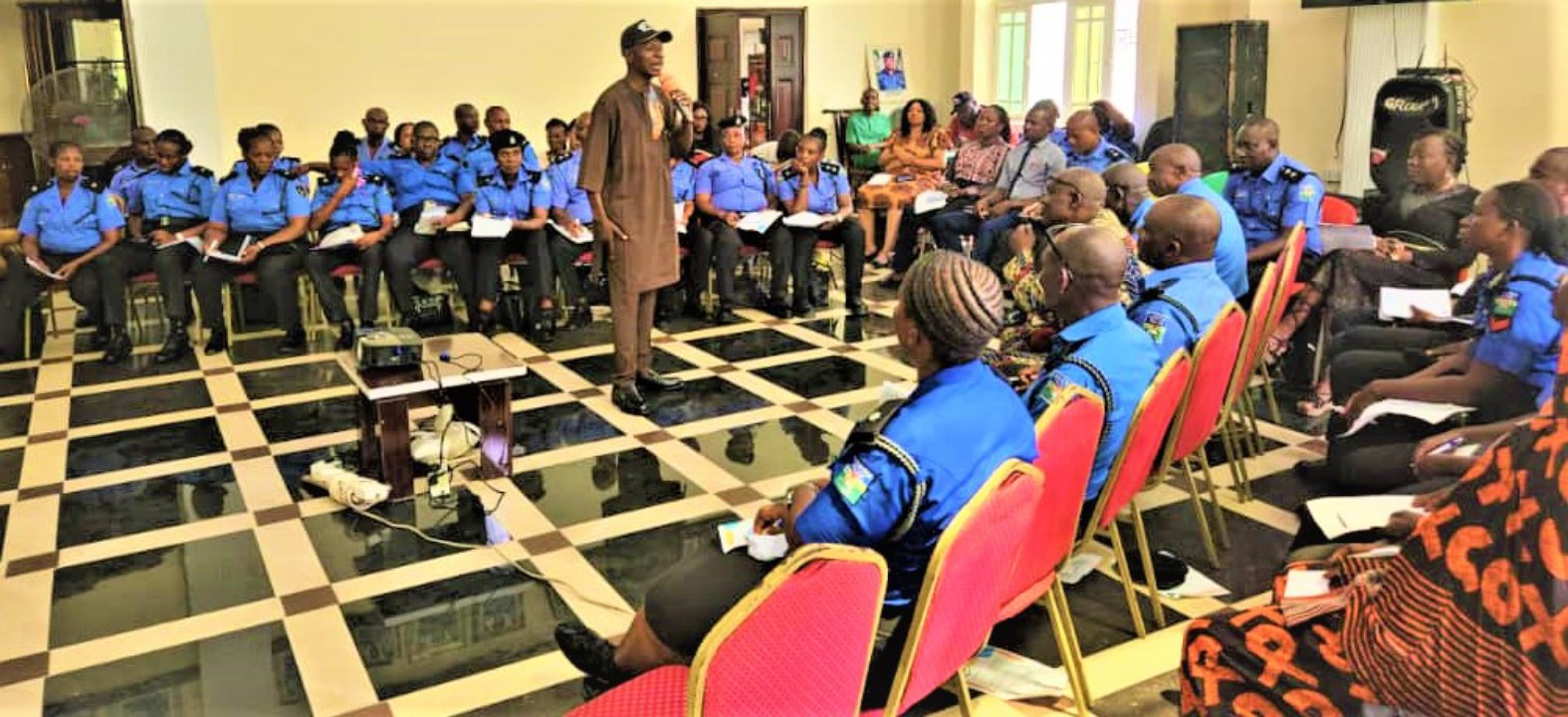
The South-South Coordinator of MFN, Amb. Edewor Egedegbe, speaking at the Town-hall Meeting
The charge was given at a high-level Town Hall Meeting held on 15 January, 2026, at the Nigeria Police Officers’ Mess, Bayelsa State Command with the aim to promote Male Feminism and curb Gender-Based Violence (GBV) in Bayelsa State.


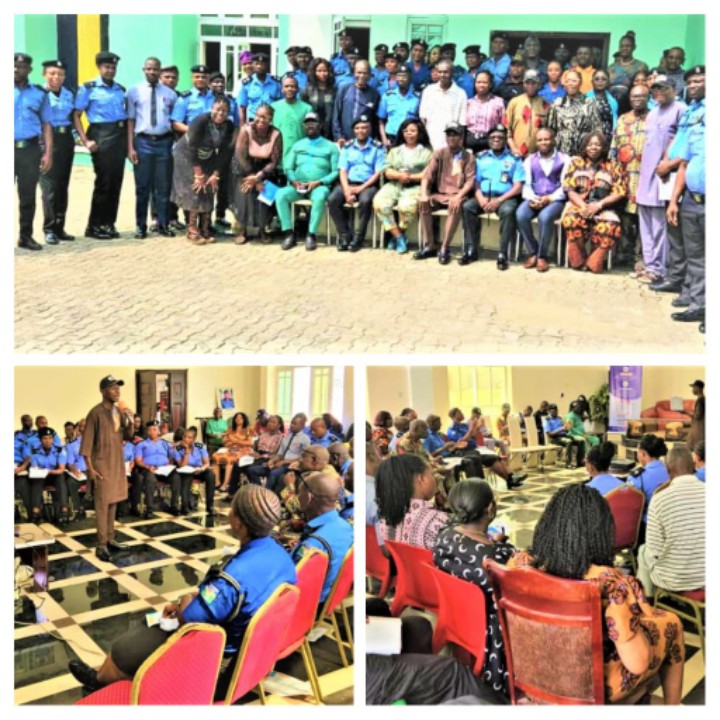
Cross Section of participants
The meeting was convened by Value Rebirth and Empowerment Initiative (VREI), in collaboration with the Nigeria Police Force (Zone 16), with support from the African Centre for Leadership, Strategy and Development (Centre LSD).
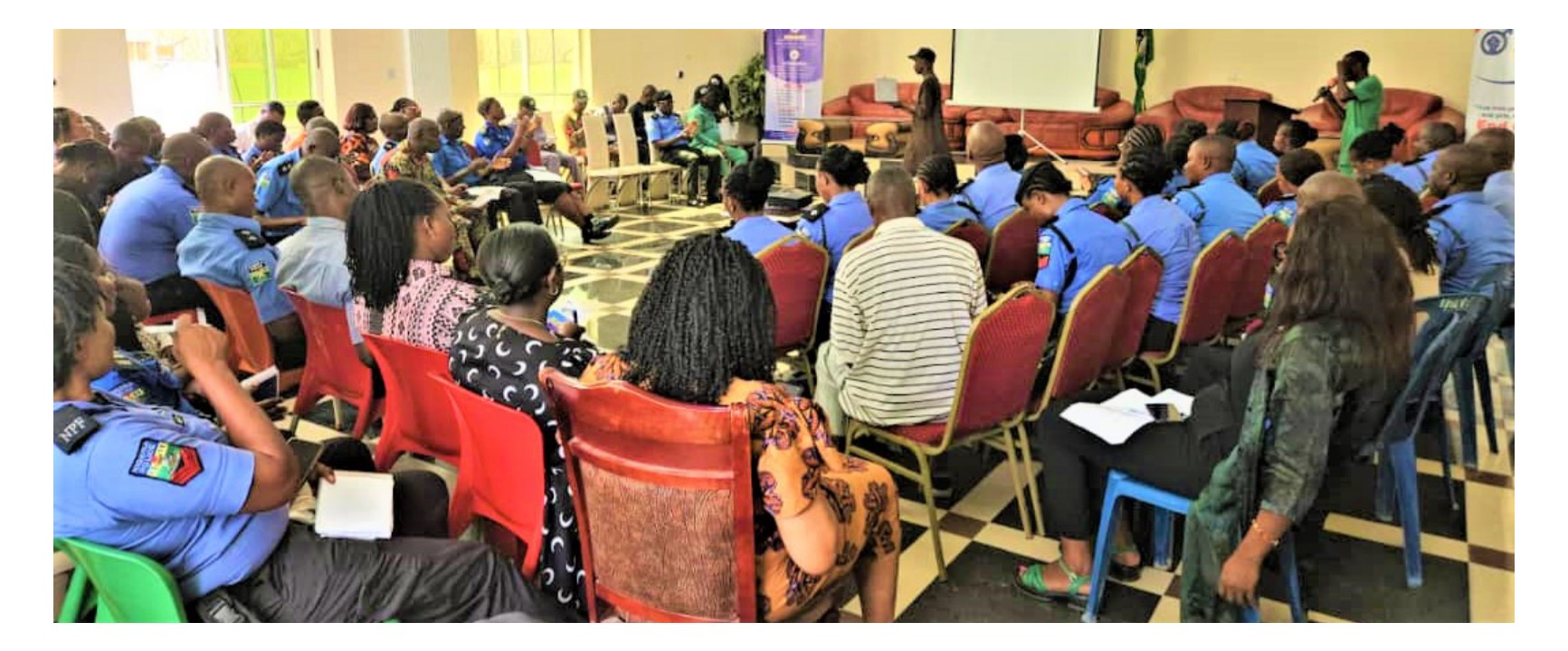
Cross Section of participants
Critical stakeholders, numbering 82, including police officers, traditional rulers, religious and community leaders, civil society practitioners, media professionals, and male allies, attended the epoch meeting and pledged commitment to advance strategies to engage and enlist men to become key partners in promoting gender equality and preventing GBV in Bayelsa State and the wider Nigeria.
Taking turns to speak at the event, the participants highlighted the urgent need to address rising incidents of GBV in Nigeria, stemming primarily from deep-rooted gender inequality, unequal power dynamics, entrenched patriarchal norms, harmful social norms, weak enforcement of laws, weak legal protections, and economic instability.
The town-hall meeting progressed with the participants examining the societal challenges faced by women, particularly female police officers such as pervasive gender discrimination, sexual harassment, and limited career progression.
The participants also acknowledged the important role the Nigeria Police Force plays in responding to GBV cases through specialized units and Gender Desk Officers.
Continuing, they expressed the compelling need to strengthen the implementation of existing laws concerning GBV, restore survivor’s sense of safety, and improve allocation of resources.
The participants further noted that Nigeria’s decline in the 2025 Global Gender Gap Index – 124th out of 148 countries globally, and frowned at the recurring underrepresentation of women in leadership cycles, and across institutions across political and business spheres.
They stressed the importance of protecting victims of GBV through survivor-centered approach – a foundational method of support that prioritizes the rights and needs of survivors to restore their sense of safety, power, and control.
According to the participants, the survivor-centered approach is based on four fundamental principles including Safety geared towards prioritizing the physical and emotional safety of the survivor and Confidentiality targeted at ensuring that information is only shared with the survivor’s explicit, informed consent.
Others include Respect which is to ensure treating the survivor with dignity, believing their story, and respecting their choices and Non-discrimination that priotises providing equal, fair support, regardless of age, gender, race, or other social strata.
The highpoint of the town-hall meeting was the participants’ adoption of a set of resolutions with the aim of strengthening measures to prevent GBV and quicken response to GBV emergencies. These include enhancing collaboration between the police and civil society organizations; advocating for the amendment of discriminatory provisions in the Police Act; engaging men as frontline advocates for gender equality; and passing down knowledge centering on prevention of GBV and promotion of gender equality across communities and institutions.
The participants also committed to promoting a clear understanding of feminism as a movement for equality, justice, and human rights for all, while taking community-level action to identify early warning signs, de-escalate potential violence, and provide referrals for survivors.
“We believe that meaningful change begins when men become active allies in challenging harmful norms and promoting respect, dignity, and justice for all,” the representatives of VREI stated.